
Uncategorized
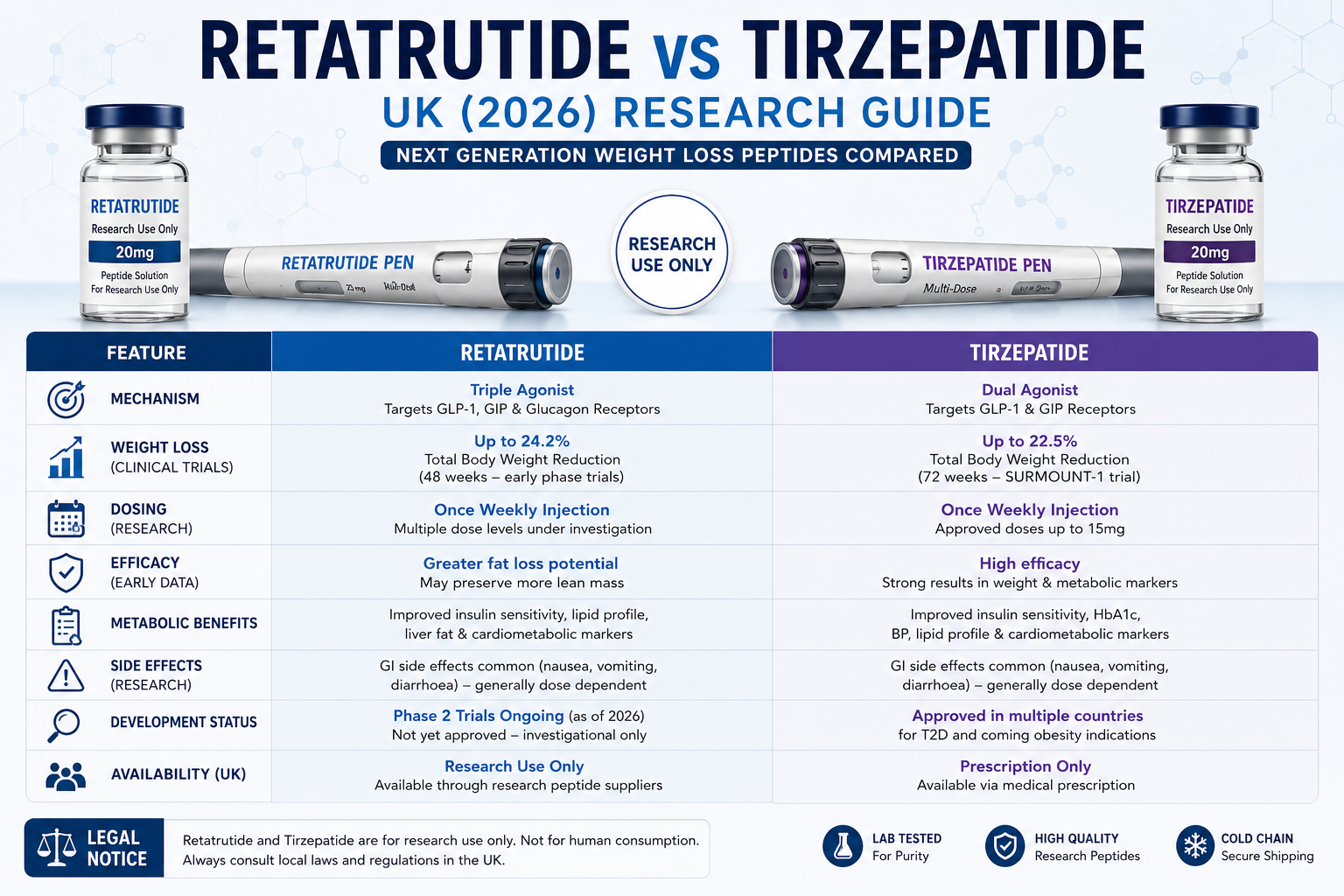
Retatrutide vs Tirzepatide UK (2026) Research Guide
May
Retatrutide vs Tirzepatide UK (2026) Research Guide
If you are considering trying one of the newer weight loss injections, you are likely to have heard about tirzepatide and retatrutide. These are two injectable prescription medicines that can help you lose weight and improve your health. When you compare retatrutide vs. tirzepatide, you will see they are similar in some ways, but they work a bit differently and have slightly different benefits.
This article will compare these two medications for weight loss and provide an overview of what they are, what each one does, and how to decide which might be a better option for you.
Is Retatrutide the Same as Tirzepatide?
No, these medications are similar and belong to the same family of drugs called GLP-1 agonists, and are both used for blood sugar control and weight management, but they contain different ingredients.
GLP-1 agonists are drugs that copy natural hormones that your body makes when you eat food, which help facilitate many of the functions of your digestive system.
Tirzepatide
Tirzepatide (Mounjaro & Zepbound) is prescribed for people with type 2 diabetes to help regulate their blood sugar and is also used for weight loss. It mimics two hormones your body naturally makes called GLP-1 and GIP, which trigger actions that affect your metabolism, like slowing down the speed of digestion and keeping food in your stomach for a longer time, which helps you feel full. It helps control your blood sugar and reduces your appetite, so you feel satisfied while eating smaller portions. It blocks food cravings and helps your body use the calories you eat more efficiently, rather than store them as fat.
Retatrutide
Retatrutide is a newer medicine that has not been officially approved by the FDA for general use and is still being tested in clinical trials. What makes retatrutide different is that, like tirzepatide, it mimics GLP-1 and GIP but also copies a third hormone called glucagon. The glucagon hormone helps your body burn more calories, use stored fat for energy, and boost your metabolism. Retatrutide enhances the function of three different hormones, and clinical trials have shown that participants using it may lose more weight than with other GLP-1 medications like tirzepatide or semaglutide.
Is Retatrutide Better than Tirzepatide?
Both tirzepatide and retatrutide help your body manage hunger, control cravings, and burn calories more efficiently, and can help you create a calorie deficit so you can lose weight. They both work by mimicking natural hormones that send signals from your digestive system to your brain. These signals help you feel full, slow how quickly food leaves your stomach, and help regulate the release of insulin after meals, which helps your body to manage blood sugar levels more effectively. There is no definitive answer to whether one is better than the other when comparing retatrutide vs. tirzepatide because everyone will respond differently to the medication.
Tirzepatide copies two hormones, and retatrutide copies the same two and also adds a third hormone called glucagon, which can increase the speed at which your body burns energy and fats. This extra hormone makes retatrutide a bit stronger and may offer more significant weight loss to individuals who have been using tirzepatide and have not experienced the results they have expected or who have reached a plateau. Keep in mind that the addition of the third hormone may produce more significant side effects for some people, and their body may tolerate tirzepatide better, making it the best choice for them.
How Do Retatrutide vs. Tirzepatide Compare?
Both medications have shown significant weight loss results in clinical studies, but the numbers are a bit tricky to report because they are not gathered using the same research designs. This means these numbers are not a perfect head-to-head comparison but will provide a general idea of what each medication can do.
Weight Loss Results
Tirzepatide
In the later stages of the larger studies, tirzepatide helped people lose an average of around 20 to 22 percent of their starting body weight over 72 weeks of treatment. An example of these results would be if someone who weighed 200 pounds began using tirzepatide, they could expect to lose around 40 to 44 pounds in about 16 months.
Retatrutide
In the early clinical trials, retatrutide has already shown average weight loss results closer to 24 percent at only 48 weeks. That same person weighing 200 pounds might lose almost 48 pounds in a shorter length of time.
Blood Sugar Control
GLP-1 medications were initially created to help individuals with type 2 diabetes regulate their blood sugar, and both tirzepatide and retatrutide can help improve blood sugar levels. In medical talk, your HbA1c level is like a report card for your blood sugar, and lower numbers mean better blood sugar control. Blood sugar A1c levels that are considered normal fall around 5.7, and doctors want individuals who have type 2 diabetes to have at least A1c levels that are 6.5 or lower.
Tirzepatide
In large studies called the SURPASS trials that lasted 40-52 weeks, tirzepatide helped lower HbA1c levels for patients by an average of between 2.37% and 2.59% at the highest dose of 15 mg. People who were 65 years and older participating in the trial and using tirzepatide saw their HbA1c drop by around 1.97% to 2.10% regardless of their dose.
Retatrutide
In the early studies with people who have type 2 diabetes, retatrutide lowered HbA1c by 1.3% to 2.0% when patients took the 4-12 mg doses for about 24 weeks. Almost 82% of the participants taking retatrutide got their HbA1c below 6.5%, and around 31% of them even reached below 5.7%, which is a normal level for people without diabetes. Retratrutide is still in the clinical trial phase, but to date appears to excel at blood sugar regulation in a shorter time frame compared to tirzepatide.
Side Effects
Tirzepatide and retatrutide both cause side effects that are similar and associated with other GLP-1 medications.
Tirzepatide
Most side effects are related to your digestive system because these drugs slow down how fast food moves through your stomach and intestines. Common issues people experience include nausea, vomiting, diarrhea, and constipation. They can be mild to moderate, but they gradually dissipate for most people as their body adjusts to the medication. Most people experience these side effects when they first begin using tirzepatide and each time their dose is increased in strength.
Retatrutide
The side effects of retatrutide are almost identical to the ones experienced by tirzepatide users, but since retatrutide includes the third hormone, glucagon, they may be more intense. Some users also noticed increased fatigue at first but had a boost in energy after their body got used to the medicine. Long-term side effects are still unknown because research is ongoing.
How Do I Choose Between Retatrutide vs. Tirzepatide?
Choosing the right medicine is a decision that should be made together with your doctor. Some people do very well with tirzepatide and achieve the weight loss results and improved blood sugar control they are looking for. Others may eventually qualify for retatrutide when it becomes approved and available. Dr. Simmons can help you determine if GLP-1 medications are right for you and which one would be best for your needs and circumstances.
Please Note
Tirzepatide is FDA-approved and is available today with a legitimate prescription written by a doctor. Retatrutide is still undergoing clinical trials and has not yet been approved for general use. This means it can only be legally obtained within these clinical trials. Using unregulated or unapproved medications can be dangerous and is not recommended.
Where Can I Find Tirzepatide to Help Me Lose Weight?
You can learn more about tirzepatide for weight loss through Simmons MD Advanced Weight Loss Solutions in Miami by working directly with their knowledgeable team of experts. Dr. Okeefe Simmons will first review your health history and weight loss goals to see if this medication is right for you, and if you qualify, they can prescribe FDA-approved tirzepatide, such as Mounjaro or Zepbound, as part of a monitored program for weight loss.
Simmons MD Weight Loss Solutions offers both in-person visits in Miami and telemedicine appointments, so you may not need to personally visit the office. Ongoing guidance and support are provided while you are using the medication to ensure you get the best results with your safety as a priority.
Set up your consultation today to find out if you would be a good candidate for tirzepatide or another GLP-1 weight loss medication.
FAQs About Tirzepatide vs. Retatrutide
Is It Okay to Switch from Tirzepatide to Retatrutide?
Some people consider switching from tirzepatide to retatrutide if they are not losing weight as they expected or feel their weight loss has slowed down. Using any GLP-1 medication should only be done under the supervision of a doctor who understands precisely how these medications affect your body and is an expert in weight management, like Dr. Okeefe Simmons with Simmons MD Advanced Weight Loss Solutions.
Normally, before switching medications, Dr. Simmons will look at your medical and weight loss history, along with your current progress, before he determines the adjustments that are right for you and your circumstances. Switching medications can be done, and often is, to help promote additional weight loss or to reduce the severity of common side effects like nausea.
You may need to take a period of time between stopping one medication and starting another to make sure the medications do not overlap and reduce side effects during the adjustment period.
Can You Take Retatrutide and Tirzepatide Together?
No, both of these are strong GLP-1 medications that work in similar ways and should not be used together. Taking both medications at once could cause your blood sugar to drop dangerously low and cause serious side effects such as:
- A rapid heartbeat
- Shakiness or dizziness
- Fainting or weakness
- Confusion or trouble concentrating
- Or serious, life-threatening issues like loss of consciousness, seizures, or death
What Are the Doses of Retatrutide?
Since clinical trials and research for retatrutide are still in progress, there is no official or finalized dosing schedule yet. Researchers are still studying which dose will work best and the safest way to gradually escalate the strength.
Retatrutide vs Tirzepatide UK (2026) Research Guide

Hi, this is a comment.
To get started with moderating, editing, and deleting comments, please visit the Comments screen in the dashboard.
Commenter avatars come from Gravatar.